Class Saathi
2020
EdTech application
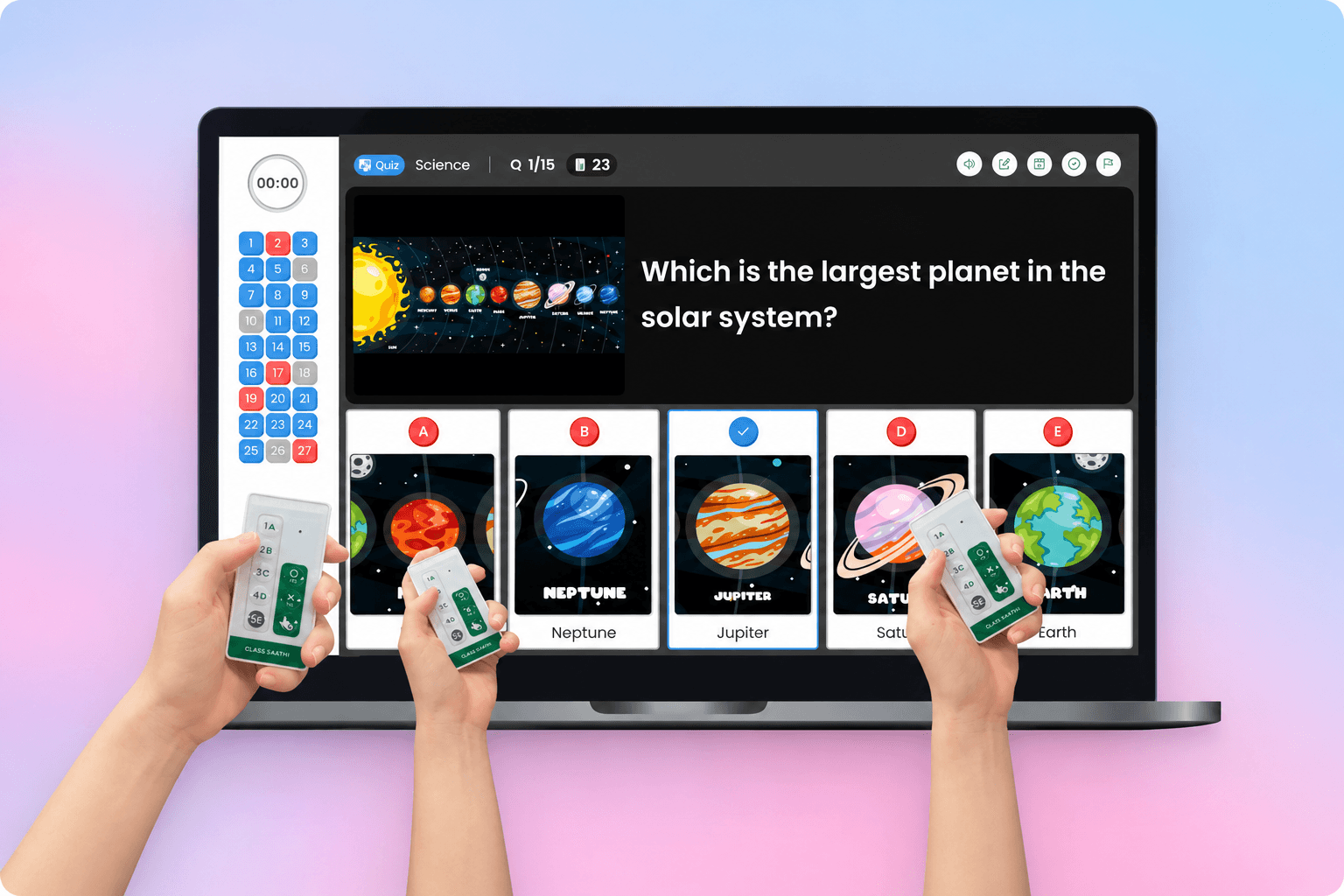
The Class Saathi app made for both teachers and students for better learning experience both in class and at home. This app required the creation of multiple scenarios, flow diagrams, wireframes for the best outcomes.
Overview
Classroom learning enhanced with technology
Traditional classroom learning often makes it difficult for teachers to track student participation and learning progress in real time, while students lack engaging and interactive ways to reinforce concepts outside the classroom. The existing experience involved fragmented workflows, limited visibility into performance, and inconsistent engagement across classroom and home learning environments. The challenge was to create a unified, intuitive platform that supports both teachers and students, enabling seamless classroom interaction, progress tracking, assessments, and continued learning beyond the classroom.
Problem
Classroom learning enhanced with technology
Traditional classroom learning often makes it difficult for teachers to track student participation and learning progress in real time, while students lack engaging and interactive ways to reinforce concepts outside the classroom. The existing experience involved fragmented workflows, limited visibility into performance, and inconsistent engagement across classroom and home learning environments. The challenge was to create a unified, intuitive platform that supports both teachers and students, enabling seamless classroom interaction, progress tracking, assessments, and continued learning beyond the classroom.
Research
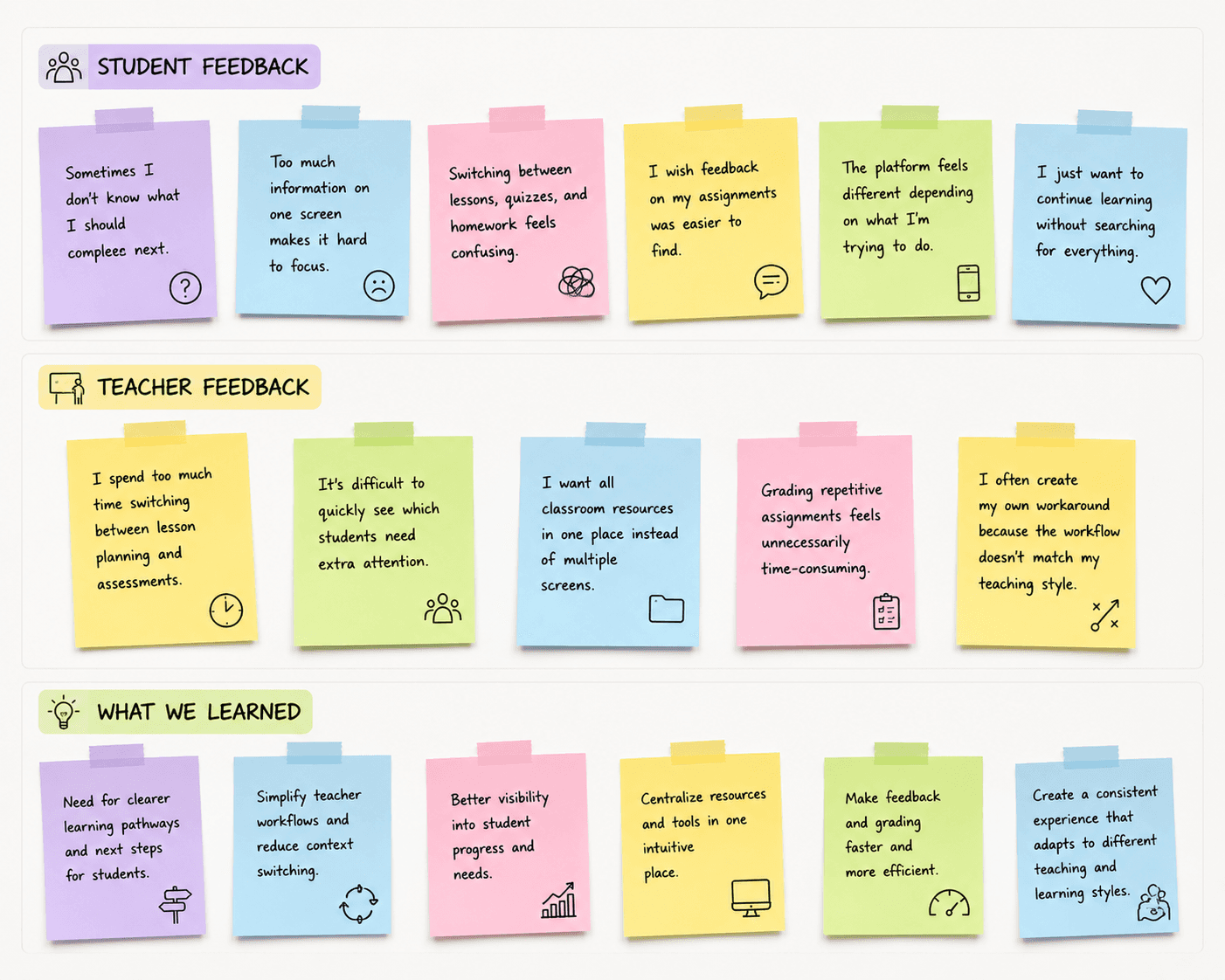
Conducted stakeholder and user interviews with teachers and students to understand classroom challenges, learning behaviors, and engagement needs.
Mapped end-to-end learning journeys across classroom and at-home environments to identify pain points and opportunity areas.
Analyzed existing teaching and assessment workflows to uncover usability gaps and improve task efficiency.
Synthesized qualitative research findings into personas, user flows, and experience requirements that informed product decisions.
Validated concepts through usability testing and feedback sessions, iterating designs to improve adoption, engagement, and ease of use.
Designs


My role
Design Solution and Production
To carry the entire design process which included requirement gathering from the client/users, brainstorming sessions with team, research, ideation, building page flows and translate them to wireframes.
Creating engaging user experiences and user flows that address business and user requirements.
Work closely with UI designers and developers to ensure the user goals are met through the journey.
Provide solutions for complex design challenges and make use of current Design trends through research to deliver innovative solutions.
Other responsibilities included : Graphic design, Website design, Social media design, Video editing, 3D modeling basics.
Ideation for intuitive, engaging and interactive designs for kids gamification app.
Worked in Domains like Ed-tech, Kids play apps etc.
Organisational Roles
Stategise the future of the app with the help of founder and other team members.
Closely worked and communicated with project stakeholders.
Other responsibilities were mentoring the juniors/freshers and help them understand the reason for app development and its impact in the indian culture.
Learnings
Designing for education means balancing the needs of both teachers and students, as each has different goals, workflows, and motivations.
Small improvements to classroom workflows can significantly increase engagement and reduce cognitive load during live sessions.
Early validation through usability testing helped uncover adoption barriers before development, leading to more intuitive interactions.
Designing for classrooms requires considering real-world constraints such as limited attention, varying digital literacy, and time-sensitive teaching environments.